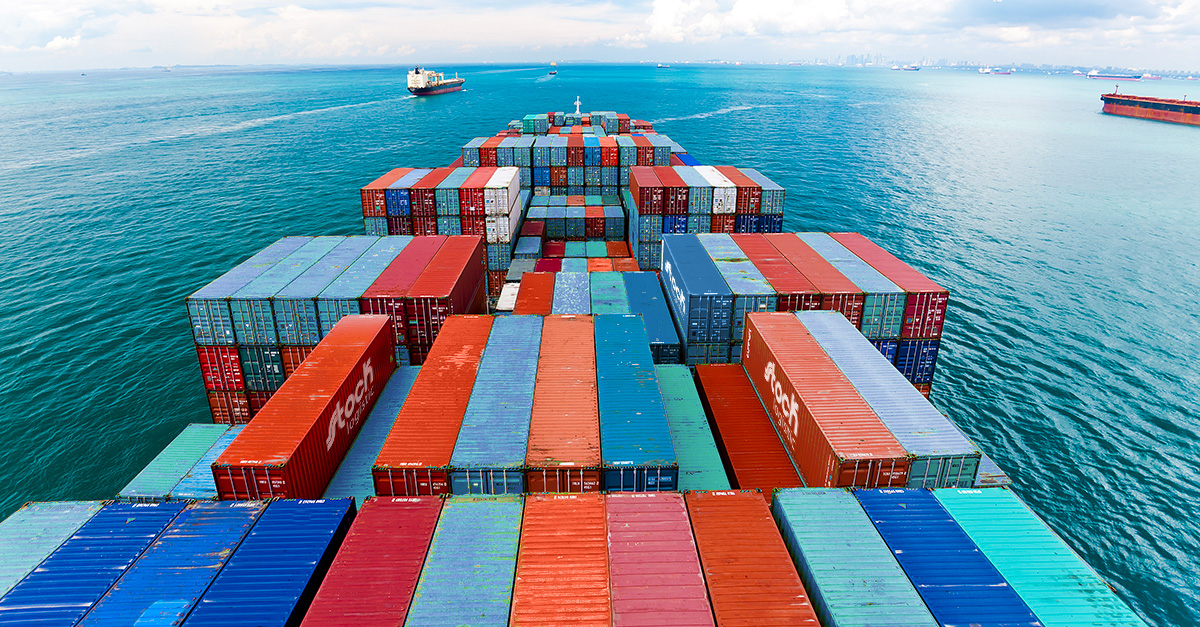
In recent years, due to globalisation and increased maritime connectivity in ports around the world, freight transport has required structural, technical and technological change in order to be able to ship and distribute cargo to all industries. Optimising transports by guaranteeing coverage in the shortest possible time has brought about the need to adapt to the new commercial ecosystem and, consequently, to the new professional challenges that have arisen within the sector.
Shipping lines have taken advantage of this condition to adjust to the current paradigm demanded by customers, reducing waiting times on routes and increasing the volume of container ships. This growth in vessel infrastructure and the consequences that flow from it are referred to as ‘gigantism’.
Today, the trend towards gigantism is a reality, as it has several beneficial features for shipping lines, such as gaining route efficiency, transporting more material in the same voyage, reducing the polluting effect and covering a wider global coverage.
The challenge of logistics operators
Logistics operators, faced with the growth in the movement of containers in logistics platforms, have had to improve their facilities to differentiate themselves from the competition and be able to compete with the current offer. Stock Logistic is constantly changing with the aim of adapting and offering our clients the best services in their complexes.
Depending on the goods to be transported, Stock Logistic adjusts its services, offering a personalised and efficient service. In addition, it works with the main shipping companies in the world and specialises in the management and transport of goods of different loads.
Shipping companies adaptations to the increase in the size of vessels
In recent decades, shipping companies have had to spend large sums of money to create infrastructures capable of transporting the maximum number of containers. Today, the largest container ship in the world belongs to the MSC Shipping Company and is called “Tessa“. It can hold 24,116 TEUs and is 400 metres long and has a beam of more than 61 metres. These changes will determine the future of maritime freight transport.