

0

The changes in the new Incoterms
On 1 January 2020, the eighth revision of the Incoterms (International Commercial Terms) will be launched. These acronyms are composed of three letters and describe the conditions of delivery of goods and products in global trade. Although Incoterms are not obligatory, and thus companies and individuals are free to agree their own conditions, their use is widespread as they facilitate agreeing the conditions under a common framework. To date, [...]
0

Capillarity in logistics
The delivery or capillary transport is the last link in the supply chain. It involves placing the product at the final point, bringing it, in many cases, closer to the centres of consumption: hyper, super, shops... The capillarity implies that, on some occasions, the points of sale that remain open on weekends and holidays -such as kiosks, service stations or railway stations- are taken advantage of so that certain companies can deposit their [...]
0
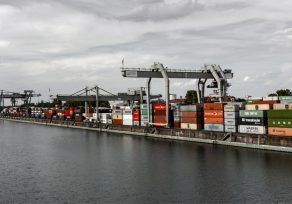
The EMSWe in the ports of the European Union
The new official regulation for a European maritime one-stop shop environment, also known as EMSWe (technologically neutral and inoperable and with harmonised interfaces) aims to facilitate the electronic information of ships entering, staying and leaving any of the ports of the European Union. This regulation replaces directive 2010/65/EU. Currently, more than 1,200 commercial ports are located in the European Union, in fact, the continent is one [...]
0

SOME TRENDS IN CONTAINER TRANSPORT
In the next few years, the land transport of containers will be conditioned by the definitive implementation of digital platforms and electronic documentation in a 4.0 technology environment. In fact, many companies will opt to invest in equipment and training to meet these standards. Digital platforms currently help many companies to decentralise their tasks and reduce costs, thus offering products to their customers more quickly. In this sense, [...]
0

What is seasonal logistics?
Seasonal logistics refers to those periods of the year in which, traditionally, there is more consumption. It can be Christmas, Black Friday, Cyber Monday, Singles Day in Asia... In these moments of the year companies in the logistics sector are forced to have additional capacity and contract extra resources. The aim is to solve, in the short term, the wave of work volume that is generated in these periods. In this context, seasonal logistics must [...]
0

Electrification of the transport sector
The search for efficient alternatives to replace fossil fuels has become one of the most important challenges facing the transport and logistics sector. Experts and institutions argue that the traditional industrial model is unsustainable at an environmental level and one of the most reliable solutions is to opt for electrification. In fact, when faced with the scepticism of depending on the fluctuation of renewable energy sources such as wind or [...]
0
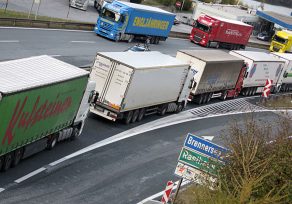
What is platooning?
The platooning is the technology by which two or more trucks circulate on the road in a joint and coordinated manner. Its use and extension in the transport of goods could be a revolution for this sector. This requires a camera, radar and wireless communication between trucks using wifi technology. For the time being, and as this concept is understood today, talking about platooning is not synonymous with autonomous truck. The greatest benefit [...]
0

The use of drones in logistics
The drones, a mixture of airplane and unmanned helicopter, started in the military and defence sector -with surveillance functions- and later extended to civilian uses: entertainment, photography, fire extinction... now, little by little, the turn has come to logistics. The drones are capable of making an inventory in a logistics warehouse, transporting goods by air or carrying out security tasks. In the United States, some companies have already [...]
0

The use of LNG will help decarbonization of transport
Liquefied Natural Gas (LNG) - natural gas that has been processed to be transported in liquid form - is increasingly being used in the transport sector, especially in the maritime sector and is on its way to becoming the most sustainable fuel today. In this sense, greater use of LNG could be able to boost the decarbonisation process in the transport sector, something that Europe and organisations such as the IMO have been demanding for some time. [...]
0
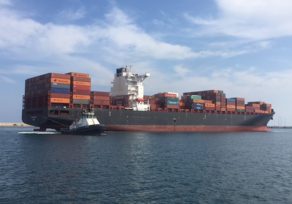
What are the main differences between the Bill of Lading and the Sea Waybill?
The Bill of Lading and the Sea Waybill are the two basic documents that guarantee maritime transport, both national and international. In many occasions they generate confusion in their use, however, each one fulfills very specific functions. The Bill of Lading, in addition to serving as a contract of carriage and receipt of goods, has the usefulness of a document of title. For its part, the Sea Waybill is the evidence of the transport contract and [...]