

0

LCL vs FCL: Optimising cargo in a shifting market
In an increasingly volatile global logistics environment, decision-making in maritime transport has evolved beyond simple cost calculations. Changing freight rates, geopolitical tensions and growing demands for sustainability are redefining the rules of the game, forcing companies to adopt a more strategic approach to managing their shipments. In this context, the choice between less-than-container load (LCL) or full container load (FCL) is a key [...]
0

Nearshoring and onshoring: significance and impact on the logistics sector
In recent years, companies have adopted outsourcing strategies in order to gain a competitive position in a globalised environment. Outsourcing provides companies with numerous benefits, such as the reduction of fixed costs and the possibility to focus on their core business by outsourcing secondary activities. Different outsourcing models Technological advances in the last decade have allowed companies to outsource their services to providers [...]
0

The use of LNG will help decarbonization of transport
Liquefied Natural Gas (LNG) - natural gas that has been processed to be transported in liquid form - is increasingly being used in the transport sector, especially in the maritime sector and is on its way to becoming the most sustainable fuel today. In this sense, greater use of LNG could be able to boost the decarbonisation process in the transport sector, something that Europe and organisations such as the IMO have been demanding for some time. [...]
0

The changes in the new Incoterms
On 1 January 2020, the eighth revision of the Incoterms (International Commercial Terms) will be launched. These acronyms are composed of three letters and describe the conditions of delivery of goods and products in global trade. Although Incoterms are not obligatory, and thus companies and individuals are free to agree their own conditions, their use is widespread as they facilitate agreeing the conditions under a common framework. To date, [...]
0

Trade wars and the rise of BRICS
Global trade is going through a period of change marked by competition between the major economic powers: the United States, the European Union and China. Geopolitical tensions, protectionism and the reconfiguration of trade alliances have generated uncertainty and instability, and countries are rethinking their economic strategies. One of the main sources of conflict is the trade war between the US and China, which has impacted key sectors such [...]
0

GREEN HYDROGEN WILL GAIN IMPORTANCE IN THE LOGISTICS SECTOR
Hydrogen gas is the most abundant chemical element in nature and is a universal, light and highly reactive material. Green hydrogen is obtained through a chemical process known as electrolysis, a method that uses electric current to separate hydrogen from the oxygen in water. At Stock Logistic, with international logistics services by land, sea and air, we follow with interest this growing trend, which is on its way to becoming a great alternative [...]
0

AIR CARGO TRANSPORT AND DIGITISATION
Now more than ever, the world of logistics stops at all those processes that can help automate operations, improve management and be more productive. The current situation, where social distance and the greater need to use more technology prevails, favours this digital current. With regard to air freight, which must be fast and agile due to the nature of the goods it handles, it will also be affected by this increase in digitalisation, which will [...]
0

Stock Logistic expands in Europe with new overland routes to Italy and Switzerland
In Europe, a highly developed and efficient continent, land transport plays a crucial role in the connectivity of its countries and businesses. Interconnected road infrastructures enable the movement of manufactured goods, raw materials and consumer goods, contributing significantly to the economic development of the region. In this scenario, Stock Logistic, a global logistics operator, offers comprehensive solutions for land transport in Europe. [...]
0

Big Data and its impact on the logistics sector
Big Data, also known as macrodata, refers to massive or large-scale data that, due to its volume, complexity or growth speed, makes it difficult to capture, manage or process. However, due to its high potential, more and more organizations are working with this type of information. Currently the use of Big Data in companies is an unstoppable trend and the transport sector is no exception. Although it is true that it is still in a very incipient [...]
0
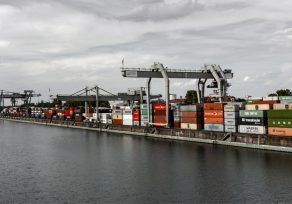
The EMSWe in the ports of the European Union
The new official regulation for a European maritime one-stop shop environment, also known as EMSWe (technologically neutral and inoperable and with harmonised interfaces) aims to facilitate the electronic information of ships entering, staying and leaving any of the ports of the European Union. This regulation replaces directive 2010/65/EU. Currently, more than 1,200 commercial ports are located in the European Union, in fact, the continent is one [...]